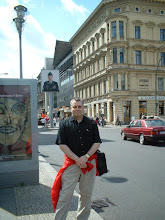
Anyhow, I ended up here, which features red bricks, noble sentiments, and the kind of people in charge you'd expect.
There are bathrooms and trees.
Each year the ones in charge unveil a new sculpture representing how much better the place is supposed to be. The piece is always named, "The New Us."
Then most of those who ended up here begin a new round of rancid betrayals, acidic hatreds, and psychotic indulgences. It's quite something to try not to see.
Me, I go to my assigned rooms and tasks but spend most of the time--where else?--in my mind because anyhow I ended up here, I'm outnumbered, and I might as well get some work done.
Wednesday, August 25, 2010

Friday, August 6, 2010
125. Clear and Difficult
It's easy to be clear: "I want to borrow money from you." "No."
It's easy to be difficult: "Red endless Duncan salts Dante, oui, to the sea in ships: Zeitgeist, oh Babylon."
It's hard to be clear: So much depends upon "depends upon."
It's hard to be difficult: Il miglior fabro = I just wrote some Italian; what do you think about that? I could have written, "To my pal, Ezra, a damn fine writer," but too much St. Louis in that.
It's good to live and write in the groove into which you've moved and to shut out notions of clear and difficult and do neither for its own sake but instead wake to your own moods.
It's easy to be difficult: "Red endless Duncan salts Dante, oui, to the sea in ships: Zeitgeist, oh Babylon."
It's hard to be clear: So much depends upon "depends upon."
It's hard to be difficult: Il miglior fabro = I just wrote some Italian; what do you think about that? I could have written, "To my pal, Ezra, a damn fine writer," but too much St. Louis in that.
It's good to live and write in the groove into which you've moved and to shut out notions of clear and difficult and do neither for its own sake but instead wake to your own moods.
Friday, July 30, 2010
124. They Say Rust
They say rust never sleeps. It doesn't wake up, either. It's rust--red, orange, annoying. It's a residue, like lipstick on a collar or the trail a politician leaves.
I've tried to like those metal sculptures left outside to rust, but I can't. They look like negligence or surrender, and keep thinking of lubricating-oil. I always want to report the sculptures to the Rust Authorities, but I don't. I'm no snitch. I just look away.
But I admit it: I like the smell of rust, O.K.?
I've tried to like those metal sculptures left outside to rust, but I can't. They look like negligence or surrender, and keep thinking of lubricating-oil. I always want to report the sculptures to the Rust Authorities, but I don't. I'm no snitch. I just look away.
But I admit it: I like the smell of rust, O.K.?
Saturday, July 24, 2010
Tuesday, July 6, 2010
122. Song and Video: "Lady of the Dew"
A link to a Youtube video/music featuring Tim Lulofs performing "Lady of the Dew," music by Tim Lulofs, lyrics by Hans Ostrom:
"Lady of the Dew"
"Lady of the Dew"
Thursday, July 1, 2010
121. Vivienne Is Disburbed
When Vivienne walked around the city that day, everything seemed in proportion. Clouds were large but spaced; the sun shone. Automobiles fit on the streets--no military-assault vehicles, no dirigibles on wheels. She saw one comparatively short person, but this person was walking with a companion her size, they held hands, and they appeared to be in love.
True, Vivienne walked past a massive blackberry patch, ridiculously immense and yet so casual about its assertion that it assumed the unobtrusive green mass one sometimes sees in paintings, a suggestion of forest. Moreover, just to the side of the patch stood a tall foxglove stalk in bloom. Its singularity served as a counterpoint to innumerable, disheveled, thorned vines. Its pink flowers looked like satin bells too soft to produced sound. A bumblebee climbed into one of these bells and disappeared.
Only when Vivienne neared her home again were things thrown off. She saw what seemed to be a butterfly walking on the ground, hauling its wings. Or was it some insect in a winged stage? Anyway the wings were black and red. They seemed built correctly for flight, but the creature struggled under them like an unfortunate actor or a laborer asked to carry a sheet of aluminum roofing on his shoulders. The background to this clumsiness was gray asphalt. Vivienne didn't pick up the creature.Vivienne walked on, disturbed.
True, Vivienne walked past a massive blackberry patch, ridiculously immense and yet so casual about its assertion that it assumed the unobtrusive green mass one sometimes sees in paintings, a suggestion of forest. Moreover, just to the side of the patch stood a tall foxglove stalk in bloom. Its singularity served as a counterpoint to innumerable, disheveled, thorned vines. Its pink flowers looked like satin bells too soft to produced sound. A bumblebee climbed into one of these bells and disappeared.
Only when Vivienne neared her home again were things thrown off. She saw what seemed to be a butterfly walking on the ground, hauling its wings. Or was it some insect in a winged stage? Anyway the wings were black and red. They seemed built correctly for flight, but the creature struggled under them like an unfortunate actor or a laborer asked to carry a sheet of aluminum roofing on his shoulders. The background to this clumsiness was gray asphalt. Vivienne didn't pick up the creature.Vivienne walked on, disturbed.
Tuesday, May 25, 2010
120. The Turkish Flag
The colors of the Turkish flag are simple--bright red, bright white--but have borne many legends of flag-origination. The Turkish flag, therefore, is clever, not the sort of flag to dismiss unthinkingly, no not at all.
The symbols of the Turkish flag are simple--a crescent, a star--but bear many meanings.
The crescent of white seems to escape Earth's red shadow as in the distance a tilted star pulsates its light. Or the crescent is a kind of open mouth ever about to taste a tumbling star, which--ah,no--never tumbles close enough.
The flag says nothing. It is a flag, and so it lets its colors and lines do the talking. The flag has something but says it tersely, "Keep it simple, people: two colors, two symbols." The flag is garrulous, saying many things at once, as the voices of a city do, as a breeze off the bright Bosphorus does.
The Turkish flag is not busy like the Union Jack or Old Glory. It tends to its business of being a flag efficiently. The flag knows what to do with light, and when the wind blows, it knows precisely how to wave.
I think I understand the Turkish a flag a little better now, having seen it flying from a standard near the Golden Horn.
The symbols of the Turkish flag are simple--a crescent, a star--but bear many meanings.
The crescent of white seems to escape Earth's red shadow as in the distance a tilted star pulsates its light. Or the crescent is a kind of open mouth ever about to taste a tumbling star, which--ah,no--never tumbles close enough.
The flag says nothing. It is a flag, and so it lets its colors and lines do the talking. The flag has something but says it tersely, "Keep it simple, people: two colors, two symbols." The flag is garrulous, saying many things at once, as the voices of a city do, as a breeze off the bright Bosphorus does.
The Turkish flag is not busy like the Union Jack or Old Glory. It tends to its business of being a flag efficiently. The flag knows what to do with light, and when the wind blows, it knows precisely how to wave.
I think I understand the Turkish a flag a little better now, having seen it flying from a standard near the Golden Horn.
Monday, May 10, 2010
119. Tomatoes #2
Tomatoes remain uncommitted to our identifications, taxonomies, and recipes.
They're the seed, the plant and--or--the fruit: or the vegetable? You see how it goes with them.
They're neither solely of the Eastern nor solely of the Western Hemispheres, my dears.
Vines, they pass for bushes and shrubs. Green, yellow, red: the inspiration for traffic lights.
Cold, they adapt to juice, Bloody Mary, and sliced, flaccid picnic lethargy.
Vegetarian, they don't mind dating hamburgers.
Hot, they seduce sauces and salsas, dance with peppers, get down to Earth with cornmeal.
Stare at a tomato plant long enough, and you will become the one gazed at, red spots dotting your vision as you swoon in sunlight.
Some tomatoes are as fat as sultans, others as tiny as earrings.
If you think you know tomatoes, you are ripe for beguiling. Ordinary and rare, hybrid and heirloom, determinate and indeterminate, tomatoes are cosmopolitan phantoms, rural rogues, night-singers, code-bearers, food, and faith.
You say tomato, I say tomato, and the tomato keeps mum on the subject of articulation.
Welcome, my friend, to the mysterious garden. Reach, reach for the red and the round.
They're the seed, the plant and--or--the fruit: or the vegetable? You see how it goes with them.
They're neither solely of the Eastern nor solely of the Western Hemispheres, my dears.
Vines, they pass for bushes and shrubs. Green, yellow, red: the inspiration for traffic lights.
Cold, they adapt to juice, Bloody Mary, and sliced, flaccid picnic lethargy.
Vegetarian, they don't mind dating hamburgers.
Hot, they seduce sauces and salsas, dance with peppers, get down to Earth with cornmeal.
Stare at a tomato plant long enough, and you will become the one gazed at, red spots dotting your vision as you swoon in sunlight.
Some tomatoes are as fat as sultans, others as tiny as earrings.
If you think you know tomatoes, you are ripe for beguiling. Ordinary and rare, hybrid and heirloom, determinate and indeterminate, tomatoes are cosmopolitan phantoms, rural rogues, night-singers, code-bearers, food, and faith.
You say tomato, I say tomato, and the tomato keeps mum on the subject of articulation.
Welcome, my friend, to the mysterious garden. Reach, reach for the red and the round.
Monday, April 26, 2010
118. Pimientos
Listen, I know this sounds absurd, but it's important to think about pimientos. To think . . .
That they can be sliced so small, like pieces of a sacred red flag. That they can become the red pupils of green eyeballs called olives and look at you from a large jar like a mad doctor's collection. That they appear by themselves, sliced and pickled, in very tiny jars with red lids; these slices and these jars say much about a hyper-differentiated culture.
That pimientos were give a name less beautiful than pimiento, and not a red name: Capsicum annuum, which is a chalky white name, according to my synesthesia.
That, unsliced, they add extravagantly to foodstuffs cooked. That, sliced and pickled into miniatures, they add almost nothing to prepared food but still are summoned by powerful recipes.
That they exist at all . . . bright red chili peppers!
In no way, some will argue, are pimientos crucial. And yet they are exalted. I for one exalt them. Did someone say there are too many pimientos? I say there are too few.
That they can be sliced so small, like pieces of a sacred red flag. That they can become the red pupils of green eyeballs called olives and look at you from a large jar like a mad doctor's collection. That they appear by themselves, sliced and pickled, in very tiny jars with red lids; these slices and these jars say much about a hyper-differentiated culture.
That pimientos were give a name less beautiful than pimiento, and not a red name: Capsicum annuum, which is a chalky white name, according to my synesthesia.
That, unsliced, they add extravagantly to foodstuffs cooked. That, sliced and pickled into miniatures, they add almost nothing to prepared food but still are summoned by powerful recipes.
That they exist at all . . . bright red chili peppers!
In no way, some will argue, are pimientos crucial. And yet they are exalted. I for one exalt them. Did someone say there are too many pimientos? I say there are too few.
Wednesday, April 7, 2010
117. Brick
A brick never set
into wall or walkway
seems all rectangular
for nothing, red out
of embarrassment or alarm:
Brick emergency! I need
to be part of something,
mortared into solidarity!
The isolated brick gives
the impression of being aware
of its situation, although
that is impossible.
What will happen?
Weather will get to it.
Or it will break. Anyway
it’ll return to soil, finish
the trip from clay to mold
to kiln to being brick to
having been brick to dirt.
into wall or walkway
seems all rectangular
for nothing, red out
of embarrassment or alarm:
Brick emergency! I need
to be part of something,
mortared into solidarity!
The isolated brick gives
the impression of being aware
of its situation, although
that is impossible.
What will happen?
Weather will get to it.
Or it will break. Anyway
it’ll return to soil, finish
the trip from clay to mold
to kiln to being brick to
having been brick to dirt.
116. Red-Winged Blackbird
A red-winged blackbird sat, sits, will sit briefly on the top of a cat-tail in a marsh. That dash of red, with yellow, astonished, astonishes, will astonish some observers, who never have nor do not now nor never will want the blackbird to fly off.
That the red dash, with yellow, should materialize on a black wing; that such common rarity should reveal itself in a marsh; that some observers lifted, lifted, will lift field-glasses to their eyes to magnify the dash: all of this is easily explained but never fully accounted for.
And the red-winged blackbird flew off, flies off, will fly off the flexible, tall, substantial reed.
That the red dash, with yellow, should materialize on a black wing; that such common rarity should reveal itself in a marsh; that some observers lifted, lifted, will lift field-glasses to their eyes to magnify the dash: all of this is easily explained but never fully accounted for.
And the red-winged blackbird flew off, flies off, will fly off the flexible, tall, substantial reed.
Friday, April 2, 2010
115. Sunlight-Shapes
A gray cat probed an empty red-labeled can with its nose. The can slid on a wooden floor on which exotic shapes of sunlight lay, and from a radio, voices discussed contemporary Cambodian music and Pol Pot's hell, which was not hell but on this planet.
We sipped hot liquid from cups, read news of war and folly; read about a failed attempt to clean a poisoned bay, as well as a skater's choice not to perform a certain jump.
Sunlight on the floor migrated. We spoke of our exhaustion. We spoke of laundry. Elements of the day accumulated to make another day. We knew enough not to speak of the incoherence of accumulation. Thinking thoughts and performing tasks, we continued, and by then the cat had fallen asleep inside one of the sunlight-shapes.
We sipped hot liquid from cups, read news of war and folly; read about a failed attempt to clean a poisoned bay, as well as a skater's choice not to perform a certain jump.
Sunlight on the floor migrated. We spoke of our exhaustion. We spoke of laundry. Elements of the day accumulated to make another day. We knew enough not to speak of the incoherence of accumulation. Thinking thoughts and performing tasks, we continued, and by then the cat had fallen asleep inside one of the sunlight-shapes.
Thursday, March 25, 2010
114. Purple
One story has purple coming first from mollusks, an oceanic ink distilled by soft-centered stone-creatures. Once in the hands of humans, purple became grand, staining garments of monarchs, aristocracy, and venerated holy ones.
It came to mean sorrow and penance, too, a mix of martyrs' red-and-blue.
Purple still bleeds into skies, is the color of some eyes according to other eyes. Its etymology owes a syllable or two to a confusion of r's and l's in English, a rippling of purpose on the surface of phonemes.
Look for the nearest purple stain, from grape or dye or something else. What do you think? What do you think of it, purple? Purple. Murmur purple; murmur it in your own language.
It came to mean sorrow and penance, too, a mix of martyrs' red-and-blue.
Purple still bleeds into skies, is the color of some eyes according to other eyes. Its etymology owes a syllable or two to a confusion of r's and l's in English, a rippling of purpose on the surface of phonemes.
Look for the nearest purple stain, from grape or dye or something else. What do you think? What do you think of it, purple? Purple. Murmur purple; murmur it in your own language.
Monday, March 22, 2010
113. Book In Your Hands
The book in your hands contains only two pages. Its cover is thick, made of black-lacquered wood.
The image on the cover represents a gray key to a door of a house that no longer stands. You still own the key the cover represents.
On the back, the pattern of a quaint, worn carpet is represented.
You open the book. You look at page two, right side, first. There is a reproduced photograph of your face. Under the photograph appears the word, "You."
On page one, left side, is a color reproduction of a woman's face. It is severe, her face, but not disturbing. The hair, cut short, is a color called "red," but the hair is really a kind of orange. Some of it is brown.
The book was and remains a gift. You close it. You think, "That was not bad, not bad at all. Satisfying, even." It has given you a lot to think about.
The image on the cover represents a gray key to a door of a house that no longer stands. You still own the key the cover represents.
On the back, the pattern of a quaint, worn carpet is represented.
You open the book. You look at page two, right side, first. There is a reproduced photograph of your face. Under the photograph appears the word, "You."
On page one, left side, is a color reproduction of a woman's face. It is severe, her face, but not disturbing. The hair, cut short, is a color called "red," but the hair is really a kind of orange. Some of it is brown.
The book was and remains a gift. You close it. You think, "That was not bad, not bad at all. Satisfying, even." It has given you a lot to think about.
Friday, March 12, 2010
112. The Now and the Then
It's the 21st century, and much that was is gone, and much is new.
This floor's made of marble. Mornings, stone is cold, including marble, any century. Bare feet on stone get cold. A mind therefore wants to move the feet it knows best off stone.
. . .You come back into the room--it is a kitchen--wearing faded red slippers. They are simple, a bit of cloth, a bit of hide. It's the 21st century, and slippers are still made, and hides are still taken and tanned.
You fill a container with water, look reflexively through a window to check for anything not right.
Stone floor, cold feet, water, wariness: aspects of the primitive, the civilized, the now and then then.
Copyright 2010 Hans Ostrom
This floor's made of marble. Mornings, stone is cold, including marble, any century. Bare feet on stone get cold. A mind therefore wants to move the feet it knows best off stone.
. . .You come back into the room--it is a kitchen--wearing faded red slippers. They are simple, a bit of cloth, a bit of hide. It's the 21st century, and slippers are still made, and hides are still taken and tanned.
You fill a container with water, look reflexively through a window to check for anything not right.
Stone floor, cold feet, water, wariness: aspects of the primitive, the civilized, the now and then then.
Copyright 2010 Hans Ostrom
Thursday, March 4, 2010
111. Charlotte's Walk
Charlotte walked on a mood-weird beach, taking it all in: sea-suds on her toes, salt-air in her nose, sounds of surf and engines--echoes, yes, and splash.
Charlotte held her sandals in one hand, touched her hair with the other, felt thin red fabric on her skin; and the breeze.
Charlotte wasn't happy, nor was she not-happy. She was. She felt herself to be. She sensed she was and had a self--and was walking by the sea.
And the breeze.
Charlotte felt almost at ease.
Charlotte held her sandals in one hand, touched her hair with the other, felt thin red fabric on her skin; and the breeze.
Charlotte wasn't happy, nor was she not-happy. She was. She felt herself to be. She sensed she was and had a self--and was walking by the sea.
And the breeze.
Charlotte felt almost at ease.
Sunday, February 28, 2010
110. Planting Radishes
The first time I planted radish seeds, I was seven years old. Soon I learned phrases like "you have to keep them watered," "the radishes are up," and "you have to thin them." I learned that when you plant seeds you also plant a probability that you will receive advice and instruction.
I disliked thinning radishes--killing several plants so another could fulfill ambitions; yanking out a plant that a seed had toiled to become, seeing it wilt instantly. No good at all.
After they'd grown a while, I pulled some, and what a great red globular surprise! I pulled, and there was a fat red things with a white tail and a green extravagance.
I washed a radish, rinsed off soil. The radish then gleamed. Light from a star we called the sun landed on it.
I bit into the radish, and its hot sweetness wasn't too much for me. My seven-year-old-taste-buds liked it fine, that taste, although I still don't know what a taste-bud is.
The meat of the radish was white, almost translucent like ice or a spiritual notion which the red cover of the radish had hidden. How do I know spiritual notions can be translucent like ice? Because I've planted radishes and eaten them. That is why.
I disliked thinning radishes--killing several plants so another could fulfill ambitions; yanking out a plant that a seed had toiled to become, seeing it wilt instantly. No good at all.
After they'd grown a while, I pulled some, and what a great red globular surprise! I pulled, and there was a fat red things with a white tail and a green extravagance.
I washed a radish, rinsed off soil. The radish then gleamed. Light from a star we called the sun landed on it.
I bit into the radish, and its hot sweetness wasn't too much for me. My seven-year-old-taste-buds liked it fine, that taste, although I still don't know what a taste-bud is.
The meat of the radish was white, almost translucent like ice or a spiritual notion which the red cover of the radish had hidden. How do I know spiritual notions can be translucent like ice? Because I've planted radishes and eaten them. That is why.
Saturday, February 27, 2010
109. Keep on Keeping On
A cat probed an empty red-labeled can of food with its nose, the can sliding on a wooden floor, on which exotic shapes of sunlight lay, and from the radio, voices discussed contemporary Cambodian music and Pol Pot's hell, which was not hell but real.
We sipped warm liquid from cups, read news of war and folly--a failed attempt to clean a poisoned bay, a skater's choice not to perform a certain jump.
We spoke of our exhaustion. We get up and work. We get up and work.
Sunlight on the floor migrated. We spoke of laundry. Elements of the day accumulated to make another day. We knew enough not to speak of the incoherence of accumulation. Thinking thoughts and performing tasks, we continued. We kept on.
We sipped warm liquid from cups, read news of war and folly--a failed attempt to clean a poisoned bay, a skater's choice not to perform a certain jump.
We spoke of our exhaustion. We get up and work. We get up and work.
Sunlight on the floor migrated. We spoke of laundry. Elements of the day accumulated to make another day. We knew enough not to speak of the incoherence of accumulation. Thinking thoughts and performing tasks, we continued. We kept on.
Sunday, February 21, 2010
108. Alpine Ride
Gus was my horse that day--"a known eater," said the wrangler, a cowgirl from Portola.
Horses and us--we picked our way through heavy timber, sunlight shafting through to illumine ferns nourished by springs.
From a clearing, we saw mountains higher than the mountain we here on. Horse-tails swished. Sweet odor of horse manure sometimes wafted. Then there: the painfully blue lake, exquisite and real.
Gus liked to sop and nip red heads of Indian paintbrush wildflowers; chew; snort. I let him eat, wasn't supposed to.
It was summer, we were riding a loop, and Gus had a sense of how pointless it all was. Alpine breezes pushed off the lake. I nudged Gus forward, past wildflowers down the the rocky, dusty, dry trail.
Horses and us--we picked our way through heavy timber, sunlight shafting through to illumine ferns nourished by springs.
From a clearing, we saw mountains higher than the mountain we here on. Horse-tails swished. Sweet odor of horse manure sometimes wafted. Then there: the painfully blue lake, exquisite and real.
Gus liked to sop and nip red heads of Indian paintbrush wildflowers; chew; snort. I let him eat, wasn't supposed to.
It was summer, we were riding a loop, and Gus had a sense of how pointless it all was. Alpine breezes pushed off the lake. I nudged Gus forward, past wildflowers down the the rocky, dusty, dry trail.
Monday, February 15, 2010
107. Red Cabins In Sweden
Summer cabins in Sweden are painted a singular red influenced by a mineral, copper.
When summer arrives, and the sun returns from its exile to Tierra del Fuego, one may be inclined to think one has earned this light, which collaborates with receptors in eyes and brain to send a signal: red cabin.
Red cabin beside a blue lake in Sweden. Yellow flowers beside a path. Shadows shifting in birch woods. Silver fish in the blue lake. Yellow birds on white/black birch branches. Custom and respite reside, implied, in the red-painted wood of a cabin.
The yellow clean hair of a woman, her children laughing, her husband sleeping in a chair outside.
The rest of the world isn't here, the woman thinks, nor is my job, nor are the bulk of my worries, nor the foul fatigue of Winter. Just far enough away, the sun isn't here, but its light and warmth are. This is the red cabin, she thinks. This is where it is and when it is, summer. This is Sweden, which isn't somewhere else, and I am resting.
When summer arrives, and the sun returns from its exile to Tierra del Fuego, one may be inclined to think one has earned this light, which collaborates with receptors in eyes and brain to send a signal: red cabin.
Red cabin beside a blue lake in Sweden. Yellow flowers beside a path. Shadows shifting in birch woods. Silver fish in the blue lake. Yellow birds on white/black birch branches. Custom and respite reside, implied, in the red-painted wood of a cabin.
The yellow clean hair of a woman, her children laughing, her husband sleeping in a chair outside.
The rest of the world isn't here, the woman thinks, nor is my job, nor are the bulk of my worries, nor the foul fatigue of Winter. Just far enough away, the sun isn't here, but its light and warmth are. This is the red cabin, she thinks. This is where it is and when it is, summer. This is Sweden, which isn't somewhere else, and I am resting.
Subscribe to:
Posts (Atom)